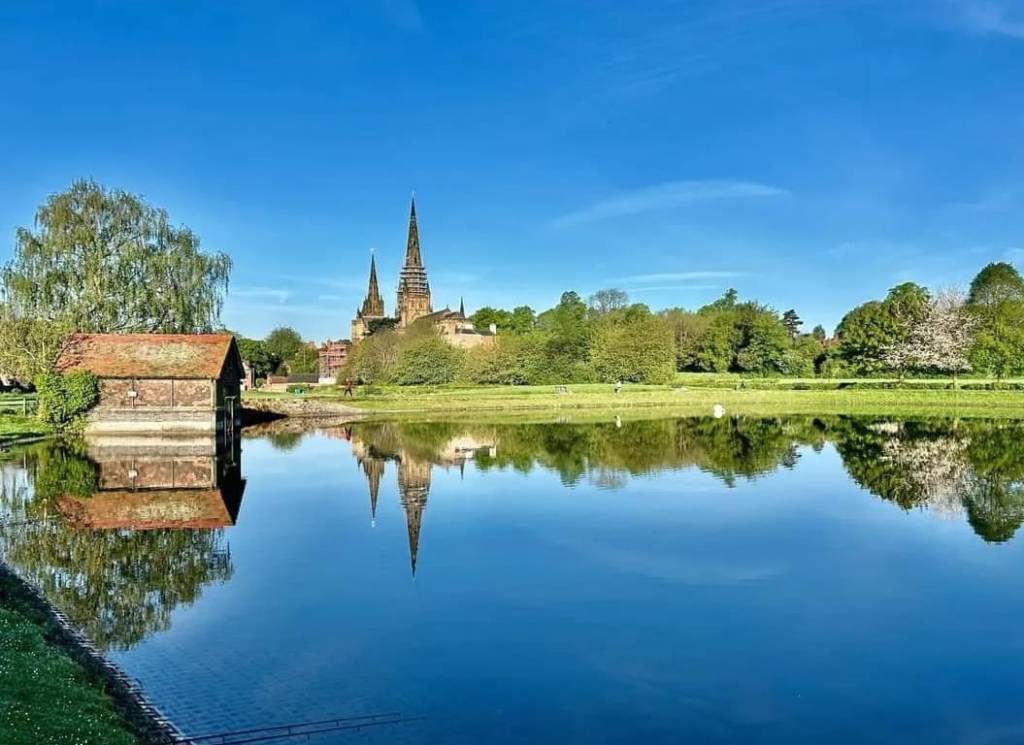
I thought we’d do a deep dive into the waters of Minster and Stowe Pools and look at some of the things Lichfeldians have lost in them over the years. Both pools were transformed into reservoirs by the South Staffordshire Water Company in the mid 19th century and amongst the items recovered from their depths were…
 Numerous cannonballs and shells, a small iron battle axe, an ancient steel horse shoe, several narrow sharp pointed knives of the sixteenth century, a large clasp knife with buck’s horn shaft, several keys of the fifteenth or sixteenth centuries and a small one of still older date, a fragment of the neck of a Flemish stone ware jug called a Greybeard or Bellarmine of the sixteenth or seventeenth century, a leaden seal or bull of one of the Popes whose name is obliterated, a number of brass counters commonly called Nuremburg tokens formerly used for making calculations, two leaden counters one of them with the letter K, the other apparently a saint’s head, an angel of the seventeenth year of James I with a hole through it for suspension it having been given to a person when touched by the King for the evil and a considerable quantity of stags horns.

 It’s quite the historical haul and we could probably write a post about each one of these aquatic artefacts but for today it’s broken hearts and soles I want to focus on.
 In 1896, there was a court case between the South Staffordshire Water Companyand a labourer named Sharman which is still quoted as an example in legal textbooks today. There’s even a YouTube video explaining the case here https://www.youtube.com/watch?v=kVJFHqCqoew (although be warned, the depictions of Lichfield in it are nothing short of criminal).
 Sharman, the defendant, had been employed by the water company to clean the pool and in the course of this work found two gold rings. The court ruled that it was not a matter of finders keepers and ordered Sharman to hand the rings to be over. As of yet, we can find no description of the rings and so we can only surmise how they came to be the pool. I reckon they were slung into the water by spurned lovers but other fanciful explanations are available.
 Fast forward from my imagined historical melodramas to the 1970s, when excess earth was taken from the pool to a council rubbish tip. Mr Miller, from the city’s Engineering and Surveyoring department, noticed fragments of Cistercian ware amongst the soggy soil and alerted local experts. On closer examination, they discovered that Minster Pool mud also contained lots of leather.
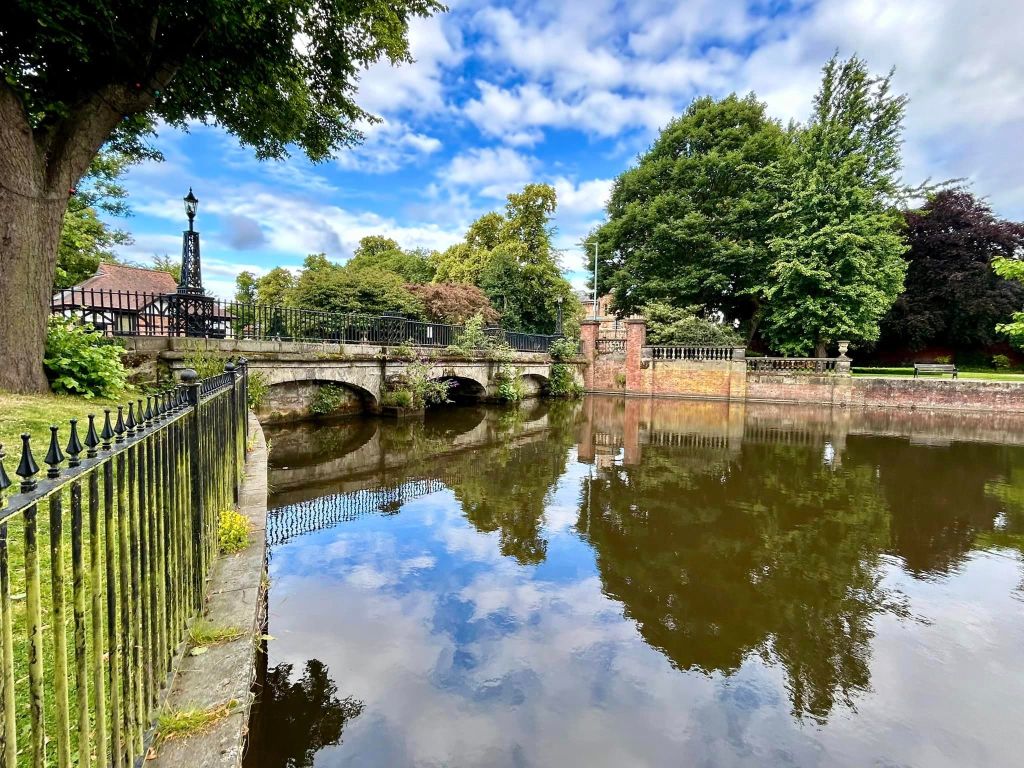
 They were the remains of medieval leather shoes from a cobbler’s workshop that had been operating near to Minster Pool between the years 1400 and 1550. It’s thought that after being repaired several times, the shoes were in such bad condition that they were eventually discarded.
 Out of all the finds mentioned above, these ancient footwear fragments appear to be the sole survivors to have remained in the city. I wonder if we could track down any of Lichfield’s other watery wonders?
Kate G
 Lichfield Discovered
Leave a comment