A 17th century alehouse and smithy at Burntwood Green became known as the Star Inn by 1790. Whilst the Star survives a second now lost beer house in the area was the Three Horseshoes which is recorded as existing by 1770 and was still serving ale in the mid-nineteenth century when Thomas Horton was the landlord.
The Star played a key role in the local nailing industry as the place where nailers would take their products to be weighed and paid for by the ‘middle men’, who would then also replenish their supplies of iron. Elsewhere these ‘foggers’ would fix scales and employ other practices to prevent paying the nailers a fair price for their products and I can’t help wonder if the good folk of Burntwood were exploited in the same way?
The pub was the place where inhabitants of Burntwood, Edgell (Edial) and Woodhouses would meet to perambulate the borders of the township, starting at a place called ‘Star Cross Corner’. Those beating the bounds in May 1835 would have walked around ‘three hamlets of straggling houses’ with a chapel built by William Salt. The history of the latter is somewhat scanty as curiously, someone at some point in the last two hundred years has cut several key pages out of the church record book.
Two men, Thomas Gregory and William Brown, fell foul of the authorities in May 1873 for running a footrace near the Star and causing an obstruction. Gregory and Brown were fined and the Bench also announced their intention to summon and fine everyone of the 200 people who had assembled to watch the race and directed local PC Wright to speak to the landlady of the Star about the pub’s involvement in the controversial contest.
As we know from the previous post on the non-murder of Catherine Ashmall, The Star was also the scene of several inquests and in April 1888, one was held here on the body of 50 year old John Matthews of Pipe Hill. Eventually. Poor John was killed in an accident involving a horse and coal cart, when the horse ran away but unbelievably, the body was left lying in the road for more than an hour as neither a police officer nor medical profession could be found to give permission to move it. When he was finally taken inside and away from public view the coroner clarified that the proper course to be pursued in such cases was to remove the body to the nearest licensed house. If you find the idea of having a pint in a place where bodies were once laid out somewhat sinister, please don’t worry. In 1906, the premises were rebuilt by The Lichfield Brewery Company.
You have to be a certain age to appreciate the following anecdote but in in 1967 the landlord was Jack Walker. When actor Arthur Leslie opened the Burntwood Carnival in 1967, the two men met and so The Star’s licensee came face to face with another Jack Walker, landlord of The Rovers Return in Coronation Street.
One of my favourite stories from around here doesn’t relate to the pub but to an extraordinary engineering feat in April 1894. Mr Samuel Lees decided he’d like to use his cottage as a store room for his business premises. Problem was the two properties were 500 yards apart. With typical Victorian ingenuity he employed 50 men to place planks beneath the foundations of his former homes and to literally lift it to where he wanted it. It was reported that it was put back down without even a brick looking out of place.
Definitely takes the idea of moving house to a whole new level doesn’t it!
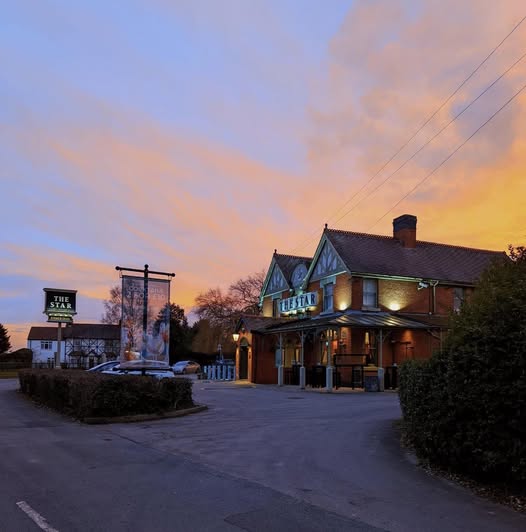
Photo credit: The Star Inn FB page
 Lichfield Discovered
Leave a comment